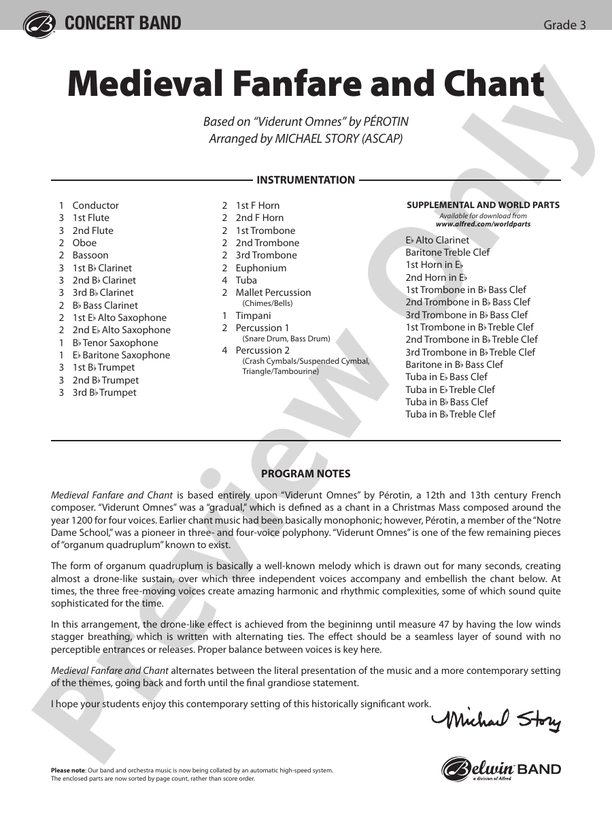
This piece is based entirely upon Pérotin's "Viderunt Omnes." A member of the Notre Dame School, Pérotin was a pioneer in three- and four-voice polyphony. "Viderunt Omnes" is one of the few remaining pieces of *organum quadruplum* known to exist. "Medieval Fanfare and Chant" alternates between the literal presentation of the music and a more contemporary setting of the themes, going back and forth until the final grandiose statement.